HOLD is an independent private service and is not affiliated with or endorsed by the IRS or U.S. government. Submitting a request does not guarantee a particular IRS outcome.
Stop IRS Collections Before They Take Action
If the IRS is threatening a levy or wage action, or has already taken money, we help you understand the notice and review possible next steps.
When appropriate, we can help communicate with the IRS, review whether a collection hold may fit your situation, and outline the next steps.
We can review your situation and explain the next step after you submit your information.
WHAT HAPPENS NEXT
We review your situation
We review the information you provide and the collection stage described in your notice.
We review available options
When appropriate, we can communicate with the IRS about available collection options.
We confirm what action is needed
We confirm what action is needed and outline your next steps.
When appropriate, we can help communicate with the IRS about possible collection options.
Helping taxpayers address IRS collection actions nationwide
The process
What Happens After You Submit
You will know exactly where you stand.
We explain the next step after reviewing your information; IRS timing and outcomes are not guaranteed.
- 1We review the information you provide
- 2When appropriate, we can communicate with the IRS about collection options
- 3We help you organize your balances, tax years, and account status
- 4We explain exactly what is happening and what to do next
Received a Final Notice of Levy or Wage Garnishment?
You may still have options — but delays can limit them.
Ignoring IRS notices can lead to bank levies, wage garnishments, and continued enforcement.
No obligation. We will review your case and contact you.
Immediate intervention
What We Do Immediately
A clear, methodical response to active IRS collection action.
- 01We review your notice and account information
- 02Discuss possible collection options when appropriate
- 03Confirm your balances, years, and collection status
- 04Build a strategic tax plan — payment options, settlement strategies, or hardship status
A clear pause in collection action
What Is an IRS Collection Hold?
A collection hold is a request to temporarily pause IRS collection actions like levies and garnishments while your case is reviewed.
It gives you time to understand your situation and decide the right next step.
IRS notices explained
Understand the letter before choosing your next step.
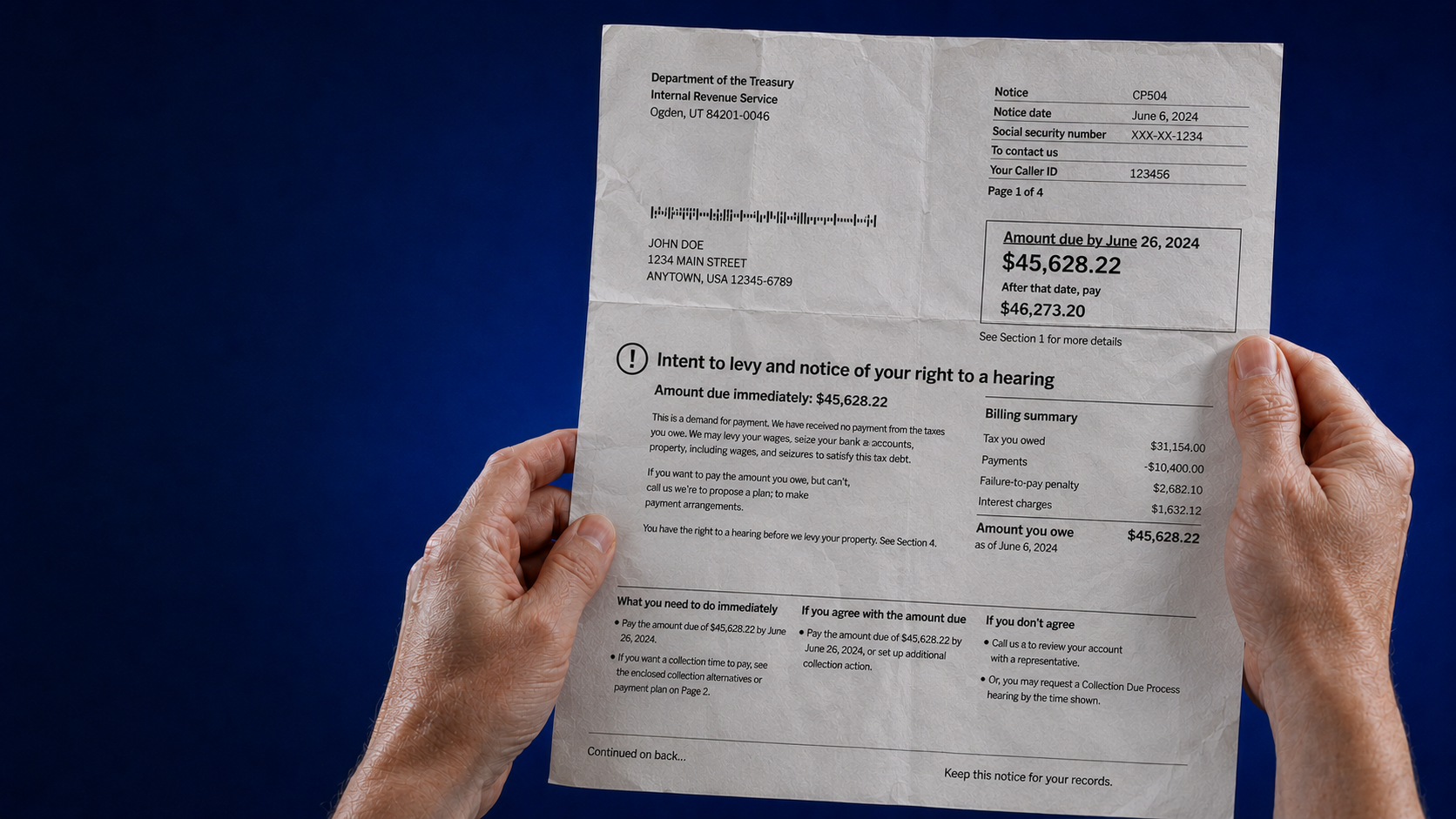
Have you received a CP14 notice, CP504 notice, IRS levy notice, wage garnishment letter, or Notice of Tax Due and Demand for Payment? Learn what the notice generally means, where it fits in the collection process, and how a strategic tax plan may address the balance.
Not sure which notice you received? Browse the Learning Center or request a case review.
Answers before you act
Common Questions
- What is a CP14 notice from the IRS?
- A CP14 is generally a Notice of Tax Due and Demand for Payment showing an unpaid tax balance. Review the tax year, amount, and response instructions so you can understand your next steps.Understand CP14 notices →
- What is a CP504 notice?
- A CP504 is generally a notice of intent to levy on certain state tax refunds or other property, depending on the account. It is not the same as a Final Notice of Intent to Levy; review the notice instructions and account history carefully.Understand CP504 notices →
- What is a Final Notice of Intent to Levy?
- It is an IRS notice explaining that levy action may be considered if the balance remains unresolved. Review the notice, dates, and available response options carefully.Review levy notices →
- Can the IRS levy my bank account?
- Yes, the IRS can levy a bank account under applicable federal collection rules. Review the levy notice and account-specific response options promptly. Learn how bank levies work →
- Can the IRS garnish wages?
- Yes, an IRS wage levy can require an employer to withhold income under federal rules. The amount and possible responses depend on your notice and account. Learn about wage garnishment →
- What should I do if I get a notice?
- Do not ignore it. Review the tax year, balance, response dates, and instructions; account-specific options may include payment arrangements or other collection responses. Understand IRS notices →
- How fast can a hold be requested?
- We can review the information you provide promptly, but any IRS action, hold, or response depends on your account and is not guaranteed. Learn about the collection timeline →
One-time
IRS Collection Intervention
One-time intervention. No ongoing contract required.
- Direct IRS contact
- Collections hold
- Strategic tax plan
- Payment options reviewed
No obligation. We will review your case and contact you.
For levy, garnishment, and urgent IRS notices. You are in the right place if you need IRS collection action stopped.